1573 | Spanish Colonial Urban Planning
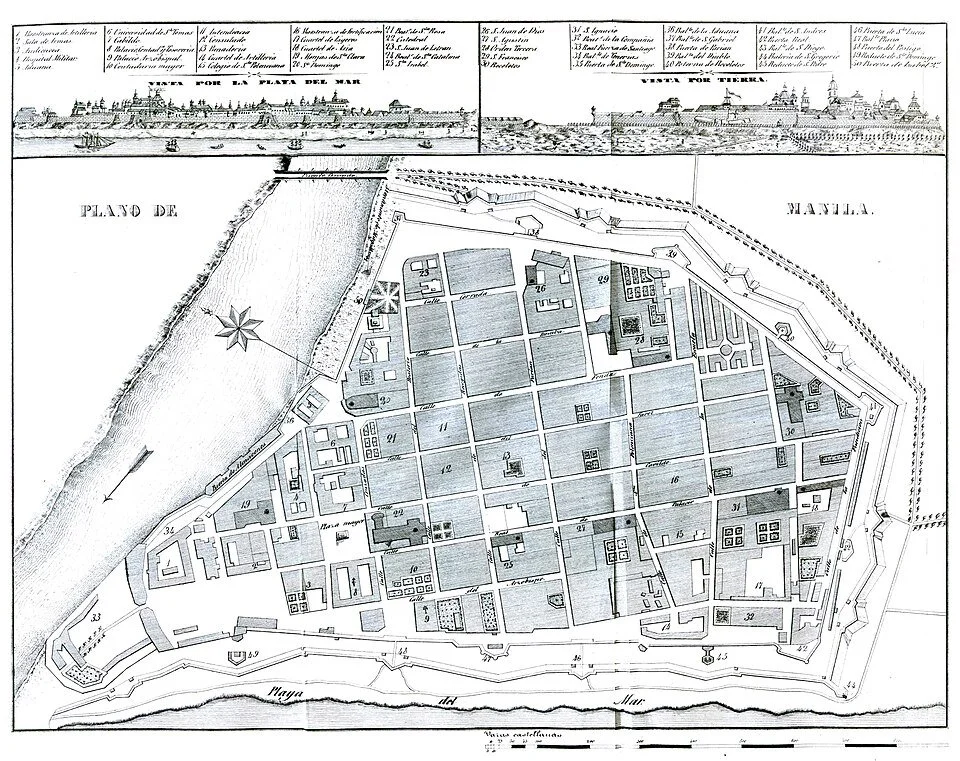
The Laws of the Indies (Leyes de Indias) were a collection of Spanish royal laws and ordinances governing colonial territories in the Americas and beyond. Among their most influential provisions were detailed instructions for planning and building towns, formalized under King Philip II in 1573 and later incorporated into a broader compilation in 1680.
The ordinances established a remarkably comprehensive approach to urban design, addressing everything from climate, topography, and access to water to street widths, building placement, and public space. At the center of the prescribed town plan was the plaza mayor, a civic gathering place surrounded by religious, governmental, and commercial buildings, with streets extending outward in a regular grid.
These principles shaped hundreds of settlements throughout Latin America and the Philippines, leaving an enduring physical legacy in cities organized around central plazas and interconnected public spaces.
But the Laws of the Indies were also instruments of colonial power. Their orderly urban plans helped establish Spanish political and religious authority, often through the displacement, forced resettlement, and exploitation of Indigenous communities.
Their legacy is therefore both architectural and political: a model of urban form that emphasized public gathering and civic life, embedded within a system of colonial domination.
Centuries later, the plazas, streets, courtyards, and relationships between public and private space associated with this planning tradition continue to influence how communities inhabit and adapt their cities.
Find more connections to