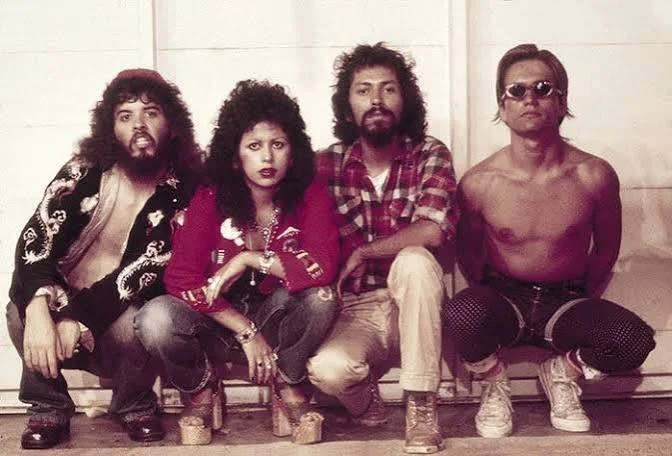
ASCO was an experimental Chicano art collective formed in East Los Angeles in the early 1970s by artists Harry Gamboa Jr., Gronk, Willie Herrón III, and Patssi Valdez. Working across performance, photography, murals, conceptual art, and film, the group challenged stereotypes of Mexican American identity and questioned who had the power to define art, culture, and public space.
Emerging from the Chicano civil rights movement, ASCO rejected expectations that Chicano artists should work exclusively within established traditions of political murals and cultural representation. Instead, they developed provocative, often humorous interventions that confronted racism, media stereotypes, violence, and the exclusion of Chicano artists from mainstream cultural institutions.
The streets of Los Angeles became both their canvas and their stage. In Stations of the Cross (1971), members staged a procession along Whittier Boulevard, responding to the violence surrounding the Chicano Moratorium protests. In Spray Paint LACMA (1972), Gamboa and Gronk symbolically claimed a place for Chicano art at the Los Angeles County Museum of Art by tagging an exterior wall.
ASCO also created No Movies, elaborate staged photographs that resembled film stills from movies that did not exist. These works challenged Hollywood's limited portrayals of Mexican Americans while imagining alternative stories and identities.
The group's name, asco, is Spanish for disgust or nausea, reflecting their rejection of social and artistic conventions.
ASCO's work reveals how streets, sidewalks, buildings, and public institutions are never merely physical settings. They are places where identity is expressed, cultural narratives are challenged, and communities assert their presence.
Keep Exploring