Jane Jacobs

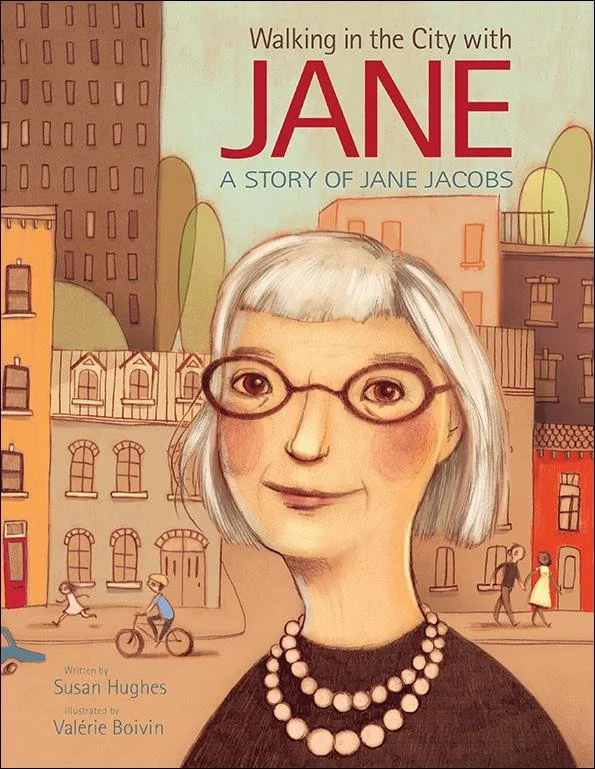
Jane Jacobs changed the way generations of people think about cities, largely by paying close attention to what was already happening on the sidewalk.
A writer, activist, and self-taught urban thinker, Jacobs challenged the dominant planning ideas of the mid-20th century, which often treated cities as problems to be rationalized through highways, superblocks, urban renewal, and separation of uses. Instead, she argued that the apparent messiness of successful neighborhoods—the shops, stoops, children, strangers, regulars, pedestrians, old buildings, new businesses, and overlapping activities—was not disorder at all. It was a complex social system.
Her 1961 book The Death and Life of Great American Cities gave language to ideas that have since become foundational to contemporary urbanism: mixed uses, short blocks, density, “eyes on the street,” and the importance of everyday encounters in creating safety, trust, and belonging. Most importantly, Jacobs insisted that cities should be understood from the ground rather than primarily from plans, maps, or theories.
She also acted on those beliefs. In New York, Jacobs became a prominent opponent of urban-renewal projects and expressways championed by Robert Moses, helping defend neighborhoods including Greenwich Village and SoHo. After moving to Toronto in 1968, she became involved in successful efforts to stop the Spadina Expressway and continued writing about cities, economies, civic life, and the ways complex systems organize themselves.
Jacobs was not an urban planner, architect, or academic. That outsider status was central to both her influence and her limitations. Her observations were rooted in particular places and experiences, and later urbanists have expanded, challenged, and complicated her ideas around race, class, gender, power, and whose experience of the sidewalk gets represented.
But the central practice she modeled remains remarkably potent: go outside, pay attention, and take seriously what people are already telling you about a place through the ways they use it.
Jane Jacobs is the inspiration behind the name, and much of the thinking behind the Sidewalk Ballet
Keep Exploring Jane Jacobs