Christopher Alexander
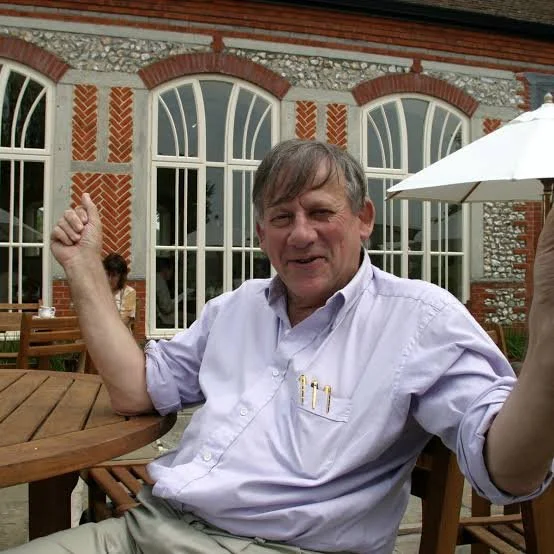
Christopher Alexander was an architect, designer, and theorist whose work asked a deceptively simple question: why do some places feel alive while others don’t?
Born in Vienna and raised in England, Alexander spent much of his career at the University of California, Berkeley, where he developed an approach to architecture and city-making centered less on professional authorship than on the patterns through which people actually inhabit and shape places.
His best-known book, A Pattern Language, written with Sara Ishikawa and Murray Silverstein and first published in 1977, identifies 253 recurring patterns—from the scale of regions and neighborhoods to buildings, rooms, windows, stairs, and places to sit. Rather than prescribing a particular architectural style, the patterns form a kind of shared vocabulary people can use to make places themselves.
That idea became enormously influential well beyond architecture. Alexander’s concept of a pattern language helped inspire approaches to software design, interaction design, organizational development, and other fields concerned with creating complex systems from interconnected, reusable patterns.
Underlying much of his work was a larger argument: the qualities that make a place feel whole, humane, and alive emerge through relationships—between people, buildings, streets, landscape, and the countless small decisions made over time.
His later work, particularly The Nature of Order, pursued that idea even further, asking whether the quality we recognize as “life” in the built environment could be understood systematically rather than treated simply as taste.
For people working in cities today, Alexander offers both a practical toolkit and a provocation: What if making better places begins not with designing the finished object, but with understanding the patterns that allow life to happen?
Find more connections to Architecture