Antanas Mockus
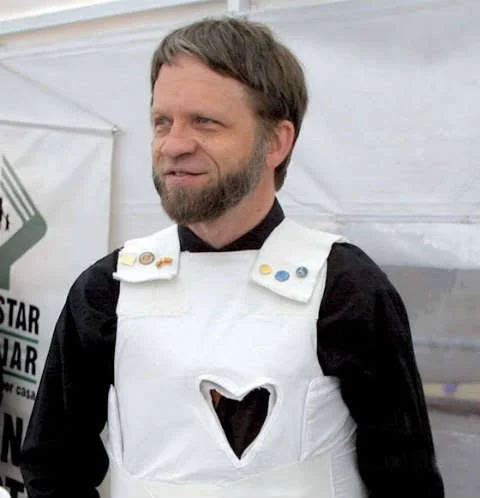
Antanas Mockus is a Colombian mathematician, philosopher, educator, and former mayor of Bogotá whose unconventional approach to governing turned the city into a laboratory for one remarkably ambitious idea: can a city intentionally change its culture?
Before entering politics, Mockus was a professor and rector of the National University of Colombia. When he was elected mayor of Bogotá in 1994, he brought an educator’s sensibility to City Hall, treating many urban problems not simply as failures of enforcement or infrastructure, but as questions of collective behavior. His administrations became closely associated with cultura ciudadana — citizen culture: using communication, education, symbolism, humor, art, and social norms to reshape how people understood their responsibilities to one another and to the city.
The interventions became famous. Mockus deployed hundreds of mimes to call attention to dangerous and inconsiderate driving; distributed cards with thumbs-up and thumbs-down symbols so residents could publicly signal approval or disapproval of one another’s behavior; promoted voluntary disarmament; experimented with restrictions on late-night alcohol sales; and even appeared showering on television during a water shortage to demonstrate how residents could conserve water.
Behind the spectacle was a serious theory of governance. Mockus was interested in the relationship between law, morality, and culture—and particularly in the gap between what people know the law requires and what their communities actually expect of them. Rather than relying exclusively on punishment, his government experimented with ways of making cooperation visible, desirable, and socially reinforced. Researchers have described his approach as unusually pedagogical and citizen-centered, favoring recognition, participation, play, and persuasion alongside conventional government authority.
Mockus has referred to some of these interventions as “cultural acupuncture”: relatively small actions applied at points where social behavior might be particularly susceptible to change. The individual interventions could be playful, but the questions underneath them were enormous: Why do people follow rules? How is trust created? What do citizens owe one another? And what role can government play in building a culture in which people actively participate in the life of their city?
His work in Bogotá remains an extraordinary example of the city itself being used as a classroom—and citizenship as something people can practice together.
Find more connections to Civic Engagement